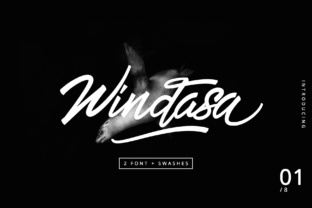
Windasa: A Hand Lettering Display Font for Creative Expression
Windasa is more than just a font—it's a creative tool that brings elegance and personality to any design. As a hand lettering display font, it combines the fluidity of handwriting with the precision of typography. Its flowing swashes and graceful curves make it ideal for projects that demand a touch of sophistication and artistry.
Whether you're designing a logo, creating a banner, or working on a poster, Windasa adds a unique visual flair that stands out. It’s particularly well-suited for projects that benefit from a personal, handwritten feel without sacrificing clarity or style.
What Makes Windasa Unique?
Windasa belongs to the category of script fonts, but it has a distinct character that sets it apart. Unlike many other script fonts that can be difficult to read at smaller sizes, Windasa balances beauty with legibility. Its strokes are smooth, its spacing is consistent, and its overall structure makes it versatile for both large and small applications.
The font’s personality is warm and inviting, making it perfect for brands that want to convey approachability and creativity. Its soft, sweeping lines give it a modern yet timeless appeal, which is why it’s used in everything from fashion design to editorial layouts.
One of Windasa’s standout features is its swash variations. These flourishes add a refined touch to letters like 'a,' 'g,' and 'y,' allowing designers to create custom looks that feel handcrafted. This level of detail makes it a favorite among illustrators, stationery designers, and branding professionals.
Where Windasa Shines
Windasa excels in a wide range of design contexts. For logos, it offers a fresh alternative to traditional serif or sans serif fonts. Its organic shape gives a brand a sense of individuality while maintaining professionalism. It’s especially effective for businesses in the arts, lifestyle, or wellness industries.
In editorial design, Windasa can be used as a headline font to draw attention and add visual interest. It works well in magazine spreads, book covers, and even social media graphics where a bold, expressive look is needed. When paired with a clean sans serif, it creates a dynamic contrast that enhances readability and visual hierarchy.
For packaging design, Windasa adds an element of craftsmanship. Whether it’s a product label, a gift box, or a branded envelope, the font’s handwritten aesthetic conveys quality and care. It’s also popular in print materials like business cards, brochures, and signage where a personal touch is valued.
In web design, Windasa can be used for headers, buttons, or decorative elements. However, it’s important to consider how it renders on different devices and screen sizes. Testing it in various contexts ensures it maintains its intended style and legibility across platforms.
How Windasa Influences Design Decisions
Choosing the right font is more than just an aesthetic decision—it impacts how audiences perceive a brand. Windasa’s visual characteristics influence factors like readability, brand perception, and audience engagement. Its elegant swashes and fluid forms can evoke a sense of luxury, creativity, or authenticity depending on how it’s used.
When used in logos, Windasa helps establish a strong brand identity. It provides consistency across marketing materials, reinforcing recognition and trust. In commercial projects, this consistency is key to building a cohesive visual language that resonates with target audiences.
Readability is a crucial consideration when using Windasa. While it’s designed to be legible at larger sizes, it may not be suitable for body text. Instead, it’s best used as a display font for headlines, titles, or short phrases. Pairing it with a complementary typeface ensures that the overall design remains balanced and functional.
Designers should also evaluate how Windasa fits into their project’s broader design assets. Does it align with the brand’s tone? Does it complement other elements like colors, images, and layout? Answering these questions helps ensure that the font serves the design rather than distracting from it.
Practical Tips for Using Windasa
If you’re considering Windasa for your next project, start by testing it in different sizes and contexts. Print samples or use digital tools to see how it looks in real-world applications. This will help you understand its strengths and limitations.
Font pairing is another important aspect. Windasa pairs well with modern sans serifs like Montserrat or Lato, creating a clean and professional look. For a more classic feel, pair it with a serif font like Playfair Display or Georgia. The goal is to create a harmonious balance that enhances the overall design.
Reviewing the included styles is essential. Many display fonts come with multiple weights or variations, such as regular, bold, or alternate glyphs. Understanding what’s available allows you to maximize the font’s potential and avoid unnecessary complexity.
Commercial licensing is another factor to consider. Make sure you have the proper rights to use Windasa in your projects, especially if they involve public-facing content or commercial distribution. Always check the license terms before integrating the font into your workflow.
Finally, think about the message you want to convey. Windasa’s personality is versatile, but it works best when it aligns with the project’s goals. Whether you’re aiming for a stylish, modern, or artisanal look, Windasa can help you achieve it with the right approach.