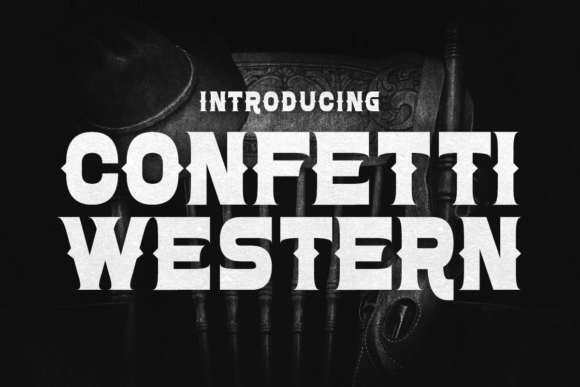
Confetti Western: Bringing Authentic Western Aesthetics to Modern Design
Typography has a way of anchoring a design in a specific time, place, or feeling. When you need to evoke the rugged spirit of the American frontier, the dusty trails of cattle drives, or the bold lettering of old wanted posters, few typefaces deliver the same impact as a well-crafted western font. Confetti Western stands out in this category because it captures that unmistakable vintage western look while remaining versatile enough for contemporary projects. Whether you are working on a branding campaign for a craft distillery, designing a poster for a rodeo event, or building a website for a rustic wedding venue, this font can give your work an immediate sense of authenticity.
Western fonts are not simply decorative novelties—they carry a visual language that communicates grit, tradition, and a certain romanticized version of the Old West. Confetti Western embraces this heritage with letterforms that feel hand-drawn, slightly weathered, and full of character. The irregular edges, subtle variations in stroke weight, and playful flourishes all contribute to a look that feels genuine rather than sterile. Unlike many digital fonts that feel overly polished, this typeface retains a human touch that makes it feel like it was carved into wood or stamped onto leather.
The Visual Characteristics That Define Confetti Western
What exactly makes a font look western? It is more than just serifs or slab-like shapes. Western typography often draws from nineteenth-century wood type, saloon signage, and the bold display lettering used on circus posters and reward notices. Confetti Western channels these influences through thick, sturdy letterforms with a slightly distressed finish. The capitals are especially commanding, with wide proportions and dramatic strokes that demand attention. Lowercase letters maintain readability while still carrying that rough-edged charm.
One notable quality of this font is its balance between decoration and legibility. Some western fonts go so far into ornamentation that they become difficult to read, especially at smaller sizes. Confetti Western avoids that trap by keeping the core shapes clear while adding just enough texture and flair to convey the desired atmosphere. The result is a typeface that works well for headlines, logos, and short blocks of text without sacrificing the western identity you are trying to project.
The distressed quality is also worth highlighting. In digital design, achieving an authentic worn look can be challenging. Too much artificial aging looks gimmicky, while too little can make the design feel flat. Confetti Western strikes a thoughtful middle ground—the rough edges and uneven surfaces mimic the natural wear of vintage printing methods, but they do not overwhelm the letterforms. This makes the font suitable for both print and digital applications where you want a tactile, handcrafted feel.
How Confetti Western Fits Into Modern Workflows
Designers today work across many mediums, and a font like Confetti Western needs to adapt to different contexts without losing its character. Fortunately, this typeface handles that transition well. In print, it excels on posters, flyers, and merchandise where the western theme is front and center. For a barbeque restaurant menu, a craft beer label, or a leather goods brand, the font instantly communicates the right tone. On screen, it holds up for hero headlines on landing pages, social media graphics, and video titles, provided you pair it with a cleaner secondary font for body text.
Pairing is one area where thoughtful choices matter. Confetti Western is a display font, which means it should not carry the entire typographic load on its own. When you use it for headings, consider pairing it with a neutral sans-serif like Open Sans, Montserrat, or Lato for supporting text. This contrast allows the western font to shine while keeping the overall design balanced and readable. For a more rustic approach, you might pair it with a simple slab serif or a handwritten script that complements the hand-drawn quality.
Another modern consideration is responsiveness. On mobile devices, highly decorative fonts can become illegible if they are too small or too detailed. Confetti Western works best when used at larger sizes—think 36 points and above for headlines. If you need to use it at smaller sizes, keep the text short and allow generous spacing. This ensures that the distressed details remain readable rather than turning into visual noise.
Practical Benefits of Choosing Confetti Western
One of the biggest challenges when selecting a themed font is finding one that does not look cheap or overused. Many western fonts fall into the trap of relying on clichés like exaggerated spurs, cacti, or sheriff star motifs that feel more cartoonish than authentic. Confetti Western avoids this by focusing on the typographic roots of western design rather than adding unnecessary gimmicks. The letterforms themselves do the work, which makes the font feel more versatile and less tied to specific imagery.
Another practical benefit is the emotional response it creates. Western aesthetics evoke nostalgia, adventure, and a sense of independence. When people see a design using Confetti Western, they unconsciously associate it with those qualities. This can be a powerful tool for branding, especially for businesses in the food and beverage industry, outdoor recreation, hospitality, or entertainment sectors. A distillery selling bourbon, a company offering trail rides, or a venue hosting country music events can all benefit from the instant recognition this font provides.
From a technical perspective, the font works well with standard design software and supports a wide range of characters, including punctuation and numerals. This might seem like a minor point, but themed fonts sometimes cut corners on character coverage, which can be frustrating when you need to typeset a phone number or a special symbol. Confetti Western offers enough character support for most project needs, so you are not constantly searching for fallback fonts.
Scenarios Where Confetti Western Delivers the Best Results
Knowing where to apply this typeface is just as important as knowing how to use it. Certain projects naturally lend themselves to the western look, and Confetti Western excels in these scenarios:
- Event promotion: Rodeos, county fairs, western weddings, and outdoor concerts all benefit from typography that matches the theme. Posters, tickets, banners, and social media graphics can all use this font to create a cohesive visual identity.
- Food and beverage branding: Restaurants, bars, and food trucks that serve barbecue, Tex-Mex, or Southern comfort food can use the font to reinforce their menu's regional identity. It also works well on packaging for sauces, spices, and craft beverages.
- Product labels: Handmade soaps, leather goods, woodwork, and artisan products often carry a rustic brand story. A font like Confetti Western helps communicate that story at a glance.
- Digital content: YouTube thumbnails, Instagram posts, and website headers for channels or pages about cowboy culture, history, or outdoor lifestyles can use the font to establish a recognizable visual brand.
On the other hand, there are situations where this font might not be the best choice. Corporate reports, formal invitations, or minimalist designs would clash with the rugged aesthetic. Similarly, if your target audience is predominantly younger and urban, a western font might feel out of place unless the theme is intentionally ironic or nostalgic. Context is everything, and Confetti Western works best when the design brief explicitly calls for a vintage or frontier mood.
What to Consider Before Choosing Confetti Western
Before committing to any themed font, it is wise to think about longevity and flexibility. A font like Confetti Western makes a strong impression, but that impression can be polarizing. Some viewers will love the authenticity, while others may see it as too niche. If your project needs to appeal to a broad audience, use the font as an accent rather than the primary typeface. Reserve it for headlines and key visual moments, and let a neutral font handle the rest of the content.
Another consideration is the emotional tone you want to convey. Western fonts can range from playful to serious, and Confetti Western leans slightly toward the rugged and earnest side. It feels more like a working font than a novelty one, which is a strength for branding but might feel too heavy for lighthearted designs. Matching the font's energy to your message is essential for a cohesive result.
File format and licensing are also practical factors. Ensure that the version you download includes the weights and formats you need—whether that is OTF, TTF, or webfont versions. Some themed fonts have restricted licensing for commercial use, so check the terms if you are designing for a client or for merchandise sales. Confetti Western is generally available under standard commercial licenses, but it never hurts to verify.
Making Confetti Western Work Across Different Mediums
Adapting a display font to different outputs requires some forethought. In print, the distressed details of Confetti Western can be enhanced by choosing textured paper stocks or using techniques like letterpress or foil stamping. These methods amplify the tactile quality of the font and make the design feel even more authentic. For screen use, consider adding subtle drop shadows or texture overlays to mimic the print experience and prevent the font from looking flat on a bright monitor.
Color also plays a role. Western color palettes typically include earthy tones like ochre, rust, saddle brown, and deep green. Against a dark or muted background, Confetti Western pops effectively, especially when used in a lighter shade like cream or off-white. On a clean white background, the distressed edges become more visible, which can either work in your favor or feel distracting depending on the design's intent. Experiment with different combinations to find the right balance between readability and atmosphere.
Animation is another area where this font can shine. In video intros or animated social media posts, the hand-crafted look of Confetti Western pairs well with subtle motion like a slow fade, a slight wobble, or a reveal that mimics a stamp being pressed onto paper. These small touches reinforce the handmade feel and create a stronger connection with the viewer.
Final Observations on Confetti Western
Fonts that carry a strong thematic identity are not always easy to use well, but they are incredibly rewarding when they fit the project perfectly. Confetti Western offers designers a reliable tool for capturing the western aesthetic without resorting to clichés or sacrificing readability. Its distressed yet clear letterforms, versatile character support, and authentic feel make it a solid choice for anyone looking to add a frontier touch to their work.
Whether you are designing for a dusty saloon-themed event, a handcrafted product line, or a digital brand that embraces rugged individualism, this font brings more than just visual style—it brings a sense of place and story. And in a world where design often competes for split-second attention, that kind of authenticity is something worth holding on to.