Blue Monday: Playful Typography for Creative Expression
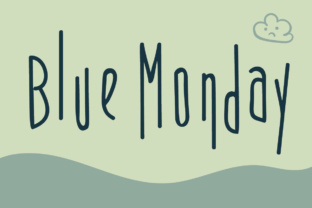
Blue Monday is a unique font that blends simplicity with whimsy, offering a fresh approach to visual communication. Its thin, rounded strokes and playful letterforms make it ideal for projects that require a lighthearted yet professional tone. Whether you're designing a logo, crafting a social media post, or creating a brochure, Blue Monday can add a touch of creativity without overwhelming the message.
This font stands out because of its balance between readability and personality. Unlike more rigid typefaces, Blue Monday feels approachable and fun, making it perfect for brands or projects targeting younger audiences or those looking to convey a sense of innovation. Its soft curves and gentle angles give it a friendly appearance, while its clean structure ensures it remains legible at various sizes and in different contexts.
Why Use Blue Monday?
Blue Monday isn't just about aesthetics—it's about purpose. It’s designed to evoke a sense of creativity and originality, making it a great choice for anyone looking to stand out in a crowded visual landscape. For designers, it offers a way to add visual interest without sacrificing clarity. For marketers, it can help create engaging content that captures attention and conveys a brand’s personality.
One of the key benefits of Blue Monday is its versatility. It works well in both digital and print formats, adapting smoothly to different mediums. Whether you're working on a website, a poster, or an email newsletter, this font maintains its character and charm. It also pairs well with other fonts, allowing for creative combinations that enhance the overall design.
Creative Applications of Blue Monday
There are countless ways to use Blue Monday depending on your goals and audience. For example, in branding, it can be used for logos, taglines, or product names to create a memorable identity. Its playful nature makes it especially effective for businesses in industries like fashion, food, or entertainment, where a friendly and approachable image is important.
In digital marketing, Blue Monday can be used for headlines, call-to-action buttons, or social media captions. Its readability at smaller sizes makes it suitable for mobile-friendly designs, while its distinctive style helps your content stand out in a feed full of generic text. For bloggers or content creators, it can be a great tool for adding visual flair to posts, headers, or even book covers.
For educators or presenters, Blue Monday can be used in slides, handouts, or infographics to make information more engaging. Its soft look can help reduce the intimidation factor of complex topics, making them more accessible and easier to digest. In personal projects, such as resumes or portfolios, it can add a creative edge that sets your work apart from the competition.
Adapting Blue Monday for Different Audiences
While Blue Monday has a playful vibe, it can be adapted to suit a wide range of audiences. For a more professional setting, it can be paired with serif or sans-serif fonts to create a balanced look. For casual or youth-oriented projects, it can be used on its own to maintain a cohesive and fun aesthetic.
When working with children or educational materials, Blue Monday can help make learning more enjoyable. Its rounded shapes and gentle curves can feel less harsh than more angular fonts, making it easier on the eyes and more inviting for young readers. For adult audiences, it can still be used effectively in newsletters, brochures, or promotional materials, provided it’s used in moderation and paired with complementary elements.
Best Practices for Using Blue Monday
To get the most out of Blue Monday, consider the following tips:
- Use it for emphasis: Apply Blue Monday to headlines, subheadings, or key phrases to draw attention without overwhelming the reader.
- Maintain contrast: Pair it with a more neutral font for body text to ensure readability and avoid visual clutter.
- Limit usage: Avoid using it throughout an entire document or design. Instead, use it strategically to highlight specific elements.
- Test different sizes: Experiment with font sizes to find what works best for your medium and audience.
- Consider context: Make sure the playful nature of Blue Monday aligns with the tone and purpose of your project.
Blue Monday in Real-World Projects
Many designers have successfully incorporated Blue Monday into their work. For instance, a small business owner might use it for a website header to create a welcoming and modern look. A social media manager could use it for a campaign slogan to add a touch of creativity and personality.
Another example is a children's book publisher using Blue Monday for chapter titles or character names. The font adds a whimsical quality that complements the story's tone. Similarly, a music festival organizer might use it for event posters to reflect the fun and energy of the event.
Conclusion: Embrace Creativity with Blue Monday
Blue Monday is more than just a font—it's a tool for creative expression. By understanding its strengths and limitations, you can use it to enhance your designs, communicate more effectively, and connect with your audience in a meaningful way. Whether you're a designer, marketer, educator, or hobbyist, there's a place for Blue Monday in your creative toolkit.
Experiment with it, test it in different contexts, and see how it can bring a new level of playfulness and originality to your work. With thoughtful application, Blue Monday can help you stand out, engage your audience, and express your unique vision.