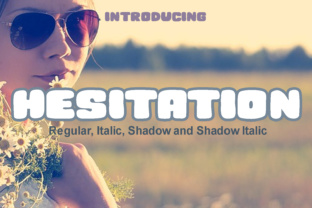
Hesitation: A Bubbly Font with Personality
If you're looking for a font that adds charm and character to your designs, Hesitation might be just what you need. This bubbly handcrafted font brings a sense of playfulness and warmth that can elevate everything from banners to packaging. With its unique style, Hesitation stands out in a crowded design landscape, making it a go-to choice for creators who want to express individuality through typography.
At first glance, Hesitation feels like a friendly face. Its rounded edges and soft curves give it a welcoming vibe, while the slight irregularities in the strokes suggest a handmade quality. This isn't a rigid, mechanical typeface—it's more like a personal note written with care. The font's personality is playful yet refined, making it versatile enough for both casual and professional settings.
Visual Characteristics and Style
Hesitation is a handwritten-style font that blends elements of a script and a sans serif. Its letters are slightly slanted and have a natural flow, which makes it ideal for projects that require a personal touch. The font's visual appeal lies in its balance between structure and spontaneity. Each letterform has a subtle variation, giving it a sense of authenticity that digital fonts often lack.
The font comes in four styles: Regular, Italic, Shadow, and Shadow Italic. These variations allow for creative flexibility. The Regular style is great for headlines and titles, while the Italic adds a bit of elegance. The Shadow options introduce depth and dimension, making them perfect for background text or decorative elements. Together, these styles offer a range of possibilities for different design needs.
Where Hesitation Shines
Hesitation excels in visual communication where personality matters. It's an excellent choice for banners, posters, and flyers that need to catch attention without being overwhelming. Its bubbly nature makes it particularly effective in marketing materials aimed at younger audiences or brands with a fun, approachable image.
In editorial design, Hesitation can add a human element to layouts. It works well in magazine spreads, blog headers, and social media graphics where a personal touch enhances the message. For packaging design, the font can help create a memorable brand identity that stands out on shelves. Its readability at larger sizes also makes it suitable for signage and wayfinding systems.
When used in web design, Hesitation can bring a fresh look to websites, especially those focused on creativity, lifestyle, or small businesses. However, it's important to consider how the font performs on screens. While it's visually appealing, it may not be the best choice for body text due to its stylized nature.
How Hesitation Influences Design
The right font can significantly impact how a design is perceived. Hesitation contributes to a brand's visual identity by conveying a sense of warmth and approachability. This can be especially valuable for businesses aiming to build trust and connection with their audience.
In terms of visual hierarchy, Hesitation's distinct shape helps draw attention to key elements. It can be used as a headline font to guide the viewer's eye through a layout. When paired with more neutral typefaces, it adds contrast and interest without clashing.
For consistency and professionalism, Hesitation offers a cohesive look across different mediums. Whether it's a printed flyer or a digital ad, the font maintains its character, reinforcing brand recognition. This consistency is crucial for building a strong, recognizable brand presence.
Choosing and Using Hesitation
Before using Hesitation, consider the project's goals and audience. If the design requires a bold, expressive statement, this font can be a powerful tool. However, if clarity and simplicity are priorities, a more traditional typeface might be better suited.
- Evaluate fit: Test Hesitation in different contexts to see how it performs. Does it work well with other fonts? Is it readable in the intended size?
- Explore styles: Use the different weights and variants to add depth and variety to your design. The Shadow styles can create a dramatic effect when used subtly.
- Check licensing: Make sure you have the proper commercial license if you plan to use Hesitation in business-related projects. This ensures legal compliance and protects your work.
Practical examples include using Hesitation for a wedding invitation, a boutique logo, or a children's book title. In each case, the font adds a unique flair that complements the overall aesthetic. When paired with a clean, modern sans serif, it creates a balanced and sophisticated look.
Ultimately, Hesitation is more than just a font—it's a design asset that can enhance the emotional impact of your work. By understanding its strengths and limitations, you can make informed decisions that align with your creative vision and practical needs. Whether you're designing for print, digital, or a mix of both, Hesitation offers a fresh and engaging way to communicate your message.